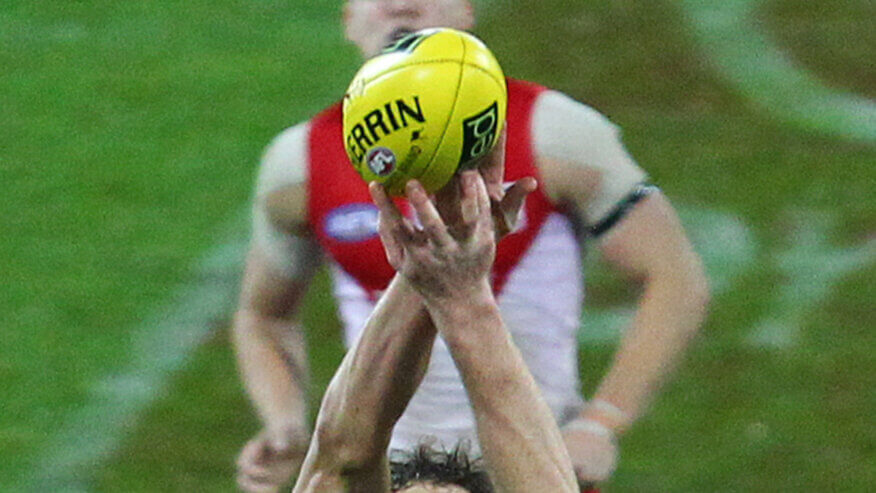
The 2026 AFL season runs from Thursday March 5 until Saturday September 26 when the AFL Grand Final takes place at the MCG and the TAB NZ have all the best AFL tips and season odds right here!
AFL 2026 Info
- 2026 AFL Season Dates: March 5 - September 26, 2026
- Season: 130th
- Opening Match: March 6: Sydney to host Carlton at the SCG in Opening Round, the first match of the year
- Number of Teams: 18
- Current AFL Premiers: Brisbane Lions (2025)
- Regular Season Ends: August 23: Final round concludes (matches TBC)
- 2026 AFL Grand Final Date: September 26: Grand Final at the MCG
Australia’s native sport is like nothing else, featuring fast-paced play, heavy hits, high flying players and plenty of scoring.
The Australian Football League (AFL) returns 2026, with the league’s 18 teams ready to battle it out for the premiership cup.
Can the Brisbane Lions back up their Grand Final wins from 2024 and 2025? Or will Sydney finally beat their Grand Final hoodoo and claim the cup? It’s all to play for in 2026.
2026 AFL Season Tips
The TAB NZ has you covered for all the insider tips on the 2026 AFL season from the head-to-head predictions on all the games throughout the regular home-and-away season to which team will rise to the top and lift the coveted Premiership Cup.
Below we take a look at some of our early 2026 AFL tips.
- Grand Final Predicted Match-Up: Collingwood vs Brisbane, with Collingwood narrowly projected as the early premiership favourite thanks to their depth, system continuity and the continued rise of Nick Daicos driving their midfield evolution.
- Top 8 Teams: Collingwood, Brisbane, Carlton, Port Adelaide, Melbourne, GWS, St Kilda and Gold Coast shape up as the teams most likely to influence September footy.

Bet on the 2026 AFL Grand Final winners now!
AFL 2026 To Win Betting Odds
Ready to take a punt on the upcoming 2026 AFL season? Here are the AFL odds for each team to win the premiership as it currently stands. Make sure to check back here as the season unfolds.
The Brisbane Lions enter the 2026 AFL season as early premiership favourites, leading the betting markets after their triumphant 2025 campaign and eyeing their third straight victory.
Their dominant form and depth have them well ahead of the chasing pack, with Hawthorn, Adelaide, and Geelong emerging as the most serious contenders, each boasting strong off-season builds and finals experience.
Collingwood and GWS also sit within striking distance, while Western Bulldogs and Fremantle round out a competitive top eight in the odds.
At the other end, clubs like West Coast, Richmond, and Essendon face long odds and uphill battles to climb back into premiership relevance.
How Many Teams Play in the 2026 AFL?
As of 2026, the AFL competition features 18 teams from across Australia. This is due to change for the 2028 season, when a Tasmanian team will enter the competition and take the total number of teams to 19.
The 2026 AFL season shapes as one of the most wide‑open campaigns in years, with powerhouse clubs reloading, emerging sides threatening a breakout, and several contenders entering genuine premiership windows.
Collingwood and Brisbane remain benchmark teams built on stability and star power, while Carlton, Melbourne and Port Adelaide look poised to surge after aggressive list moves and maturing cores. St Kilda and Gold Coast carry the league’s most exciting young talent, and both could jump sharply if their “next wave” clicks early. The Bulldogs and GWS remain wildcards capable of beating anyone when their midfield engines fire, and Geelong enters a fascinating transition phase balancing experience with youth. With tactical evolution accelerating, scoring on the rise, and a new generation of stars ready to take over, 2026 promises unpredictability, rivalry‑fuelled drama and a premiership race that feels genuinely up for grabs heading into Round 1.
Key players to watch this season include Nick Daicos, Errol Gulden, Noah Anderson, Connor Rozee, and Max King, all primed to shape the 2026 AFL narrative with breakout potential, rising superstardom, or match‑winning influence.
Early premiership predictions lean toward Collingwood, Brisbane, and Carlton as the most complete contenders, with Port Adelaide and Melbourne looming as genuine threats if their best football becomes consistent.
The teams for the AFL premiership season:
- Adelaide Crows
- Brisbane Lions
- Carlton Blues
- Collingwood Magpies
- Essendon Bombers
- Fremantle Dockers
- Geelong Cats
- Gold Coast Suns
- Greater Western Sydney Giants
- Hawthorn Hawks
- Melbourne Demons
- North Melbourne Kangaroos
- Port Adelaide Power
- Richmond Tigers
- St Kilda Saints
- Sydney Swans
- West Coast Eagles
- Western Bulldogs
Who are the Defending AFL Champions?
The defending AFL champions are the Brisbane Lions, who claimed the 2025 Premiership with a thrilling Grand Final victory. Their triumph marked a return to the top after a dominant season, and they now enter 2026 as the team to beat, aiming to go back-to-back again and further cement their legacy with a third Premiership win on the trot.
Can the Lions go back-to-back-to-back? If you think so, get in on the 2026 AFL Premiership betting action now at the TAB NZ!
About the AFL 2026 Season
The 2026 AFL season marks the league’s 130th campaign and is set to deliver a thrilling year of footy from March 6 to September 26.
The Brisbane Lions emerged as back-to-back premiers in 2025, defeating Geelong by 47 points in a packed Grand Final at the MCG, securing their fifth AFL title overall and chase a third straight premiership win.
Here’s everything you need to know about the 2026 AFL season:
Format and Competition Structure
Each AFL season is divided into two parts – the AFL Premiership season (also known as the home and away season) which comprises all the in-season matches, and the finals series, which is the AFL’s equivalent of the playoffs.
The 2026 AFL season is set up as one of the most intriguing in years, running from 5 March to 26 September 2026 and marking the league’s 130th premiership season. It features all 18 clubs across a 23‑match home‑and‑away schedule played over 25 rounds, followed by the debut of the new top‑10 finals system, which introduces Wildcard matches for teams finishing 7th–10th.
Two major rule changes headline the year: the substitute rule is gone, replaced by a five‑player interchange, and the traditional centre bounce has been scrapped, with umpires now throwing the ball up instead.
The season opens with Sydney vs Carlton at the SCG on 5 March, and key dates include Gather Round in April, Anzac Day, the bye rounds across R12–16, and the Grand Final on 26 September 2026.
With Brisbane chasing a three‑peat and a pack of contenders reshaping under the new finals format, the 2026 campaign promises a fresh layer of unpredictability and plenty of storylines from Opening Round through to the last Saturday in September.
- The 2026 AFL season is the 130th season of professional Aussie Rules. The same 18 clubs that faced off in the last 14 seasons of AFL do battle again.
- The Brisbane Lions are the defending champions having won the 2025 AFL Premiership with 122-75 Grand Final victory last season over Geelong.
- The AFL 2026 fixtures get underway on Thursday March 5, 2026, with the Sydney Swans hosting Carlton.
- Opening Round of the 2026 AFL draw features a total of four games.
- For the third time in Aussie Rules history, the 2026 season does not begin with Round 1. Instead, a four-game ‘Opening Round’ takes place before the official full eight game Round 1 get underway.
- Round 1 in 2026 again hosts the traditional Richmond v Carlton showdown at the MCG on Thursday, March 12.
- There are 25 regular AFL rounds in the 2026 season.
- The 2026 AFL Grand Final is set to takes place at the iconic MCG on Saturday, September 26, at the traditional 2:30pm timeslot.
2026 AFL Finals
| Week | Match Type | Teams Involved | Description |
|---|---|---|---|
| Week 1 | Qualifying Finals | 1st vs 4th, 2nd vs 3rd | Top four teams play; winners advance to Week 3, losers get a second chance in Week 2. |
| Week 1 | Elimination Finals | 5th vs 8th, 6th vs 7th | Bottom four of the top eight play; losers are eliminated, winners advance to Week 2. |
| Week 2 | Semi-Finals | Loser QF1 vs Winner EF1, Loser QF2 vs Winner EF2 | Winners advance to Week 3, losers are eliminated. |
| Week 3 | Preliminary Finals | Winner QF1 vs Winner SF2, Winner QF2 vs Winner SF1 | Winners advance to the Grand Final. |
| Week 4 | Grand Final | Winner PF1 vs Winner PF2 | The two remaining teams compete for the premiership. |
Major Rivalries and Key Matchups
The 2026 AFL season leans heavily on its biggest rivalries and marquee matchups, with several clashes set to shape the ladder, fuel storylines and anchor the broadcast calendar.
Historic rivalries set to define the season include:
Collingwood vs Carlton — The league’s oldest and most emotionally charged rivalry, now supercharged by both clubs sitting in the premiership window. Their early‑season meeting will be a genuine barometer for the top four.
Essendon vs Collingwood (ANZAC Day) — Still the biggest home‑and‑away event in the country, and with both lists stacked with young stars, the 2026 edition carries real finals implications.
Adelaide vs Port Adelaide (Showdown) — Always volcanic, always unpredictable. Both clubs are in aggressive phases of their list cycles, making each Showdown a potential season‑shaper.
West Coast vs Fremantle (Western Derby) — With both sides rebuilding but trending upward, the Derby becomes a test of which WA club emerges first from the reset.
Sydney vs GWS (Battle of the Bridge) — GWS’s volatility and Sydney’s consistency make this one of the most tactically intriguing rivalries in the league.
Key matchups that will shape the 2026 season include:
Brisbane vs Carlton — Two explosive midfields, two premiership‑ready lists, and a likely preview of September.
Melbourne vs Collingwood (King’s Birthday) — A modern blockbuster built on contrasting styles: Melbourne’s defensive structure vs Collingwood’s chaos‑ball speed.
St Kilda vs Gold Coast — Two of the league’s most exciting young cores; every meeting feels like a glimpse into the AFL’s future.
Geelong vs Hawthorn — Even in transition, this rivalry carries weight, and both clubs’ youth movements add a fresh edge.
Bulldogs vs GWS — A rivalry born from finals heartbreak and still simmering, with both sides capable of explosive, high‑scoring football.
These matchups anchor the season’s drama, shape the premiership race, and give fans the emotional peaks that define AFL culture.
AFL 2026 Season Insights
Take more than just confidence in the 2026 AFL Season. With our insights, you’ll be ready to bet on every match with confidence.
The 2026 AFL season arrives with a mix of volatility, optimism and genuine competitive balance, creating a landscape where established contenders and rising challengers both have clear pathways to September. Several clubs enter the year with hardened systems and star‑driven cores, while others are banking on youth development, tactical evolution and list rejuvenation to close the gap. The season’s shape will be influenced by how quickly emerging midfielders mature, how well clubs manage the increasing physical demands of high‑speed ball movement, and which teams can turn their strengths—pressure, transition, or aerial dominance—into consistent week‑to‑week advantages.
Trends shaping the 2026 season:
Youth-driven surges — Teams like St Kilda, Gold Coast and Hawthorn are powered by young cores that could accelerate faster than expected, reshaping the ladder.
Midfield depth as the separator — With scoring rising and turnover chains more valuable than ever, clubs with multiple explosive midfielders hold a structural edge.
Defensive recalibration — After several seasons of attacking emphasis, teams are rebalancing with hybrid defenders who can intercept, rebound and defend one‑on‑one.
Fixture volatility — A tight middle tier means momentum swings will be sharper, and a five‑week hot patch could launch a team from mid‑table into top‑four contention.
Clubs positioned to define the season include:
Collingwood and Brisbane remain the benchmark for system stability and big‑game temperament.
Carlton, Melbourne and Port Adelaide sit in the “now or soon” premiership bracket, with list profiles built for sustained contention.
GWS and the Bulldogs are high‑variance threats capable of beating anyone when their midfield engines ignite.
St Kilda, Gold Coast and Hawthorn represent the league’s most intriguing upside, with the potential to disrupt the established order.
Players to watch include:
Nick Daicos, Errol Gulden and Connor Rozee headline the new generation of midfield superstars.
Noah Anderson and Max King loom as breakout‑to‑elite candidates who could elevate their clubs dramatically.
Harley Reid and Will Ashcroft add intrigue as young talents returning from injury or entering their next developmental leap.
Top Teams to Watch
Collingwood
Collingwood remain the benchmark for system-based football, driven by a deep midfield, elite pressure profile and the continued rise of Nick Daicos, whose influence shapes games in multiple ways. Their list balance and big‑game temperament keep them firmly in the premiership window.
Brisbane
Brisbane enters 2026 with one of the league’s most complete lists, built around a powerful midfield and a forward line capable of overwhelming teams when they get rolling. Their challenge is converting home‑and‑away dominance into September success, but the talent profile is undeniable.
Carlton
Carlton’s surge into contention is fuelled by a maturing core—Cripps, Walsh, Curnow, Weitering—supported by improved depth and a more stable game style. They have the star power to beat anyone and the structural strength to push deep into finals.
Melbourne
Melbourne remains a threat thanks to their defensive system, elite intercepting and a midfield that can still control territory. If their forward efficiency improves, they can re‑enter the top tier quickly.
Port Adelaide
Port’s explosive midfield trio—Rozee, Butters, Horne‑Francis—gives them one of the most dynamic engines in the league. Their ceiling is as high as any team’s, but consistency and defensive resilience will determine whether they take the next step.
GWS
GWS are the wildcard: capable of beating anyone when their running game clicks, but prone to volatility. Their athletic profile and emerging stars make them a genuine threat if they find stability.
St Kilda & Gold Coast (Upside Teams)
Both clubs boast elite young talent and could jump sharply if their next wave matures quickly. They may not be favourites, but they’re among the most intriguing teams to track.
Key Players to Follow
Established stars entering their peak include:
Nick Daicos (Collingwood) — Already elite, now stepping into full midfield command with game‑breaking precision and leadership.
Errol Gulden (Sydney) — One of the league’s most damaging two‑way runners, capable of taking over games with work rate and polish.
Connor Rozee (Port Adelaide) — The heartbeat of Port’s midfield, blending burst speed with clean ball use and match‑winning flair.
Christian Petracca (Melbourne) — Still one of the most powerful finals‑style players in the competition when fully fit.
Young stars ready to explode include:
Noah Anderson (Gold Coast) — On the verge of becoming a top‑five midfielder as the Suns’ core matures around him.
Harley Reid (West Coast) — A generational talent whose second season could accelerate the Eagles’ rebuild dramatically.
Will Ashcroft (Brisbane) — Returning from injury with the potential to elevate Brisbane’s midfield to another level.
Key forwards who can reshape the ladder:
Max King (St Kilda) — If he stays healthy, he’s capable of a Coleman‑level season and transforming the Saints’ scoring power.
Charlie Curnow (Carlton) — The league’s most dangerous contested‑marking forward when Carlton’s system is humming.
Past AFL Premiership Winners
See below for a table of the latest AFL Grand Final results including the most recent AFL Premiership winners, AFL Grand Final scores and attendance records.
| Year | Winning Team | Runners-Up | Score | Attendance | Venue |
|---|---|---|---|---|---|
| 2025 | Brisbane Lions | Geelong Cats | 122 – 75 | 100,022 | Melbourne Cricket Ground |
| 2024 | Brisbane Lions | Sydney Swans | 120 – 60 | 100,024 | Melbourne Cricket Ground |
| 2023 | Geelong Cats | Brisbane Lions | 89 – 75 | 100,024 | Melbourne Cricket Ground |
| 2022 | Melbourne Demons | Western Bulldogs | 140 – 66 | 100,024 | Melbourne Cricket Ground |
| 2021 | Melbourne Demons | Western Bulldogs | 140 – 66 | 61,118 | Optus Stadium |
| 2020 | Richmond Tigers | Geelong Cats | 81 – 50 | 29,707 | Gabba |
| 2019 | Richmond Tigers | GWS Giants | 114 – 25 | 100,014 | Melbourne Cricket Ground |
| 2018 | West Coast Eagles | Collingwood Magpies | 79 – 74 | 100,022 | Melbourne Cricket Ground |
| 2017 | Richmond Tigers | Adelaide Crows | 108 – 60 | 100,021 | Melbourne Cricket Ground |
| 2016 | Western Bulldogs | Sydney Swans | 89 – 67 | 99,981 | Melbourne Cricket Ground |
| 2015 | Hawthorn Hawks | West Coast Eagles | 107 – 61 | 98,633 | Melbourne Cricket Ground |
| 2014 | Hawthorn Hawks | Sydney Swans | 137 – 74 | 99,454 | Melbourne Cricket Ground |
| 2013 | Hawthorn Hawks | Fremantle Dockers | 77 – 62 | 100,007 | Melbourne Cricket Ground |
| 2012 | Sydney Swans | Hawthorn Hawks | 91 – 81 | 99,683 | Melbourne Cricket Ground |
| 2011 | Geelong Cats | Collingwood Magpies | 119 – 81 | 99,537 | Melbourne Cricket Ground |
| 2010 | Collingwood Magpies | St Kilda Saints | 108 – 52 | 93,853 | Melbourne Cricket Ground |
| 2009 | Geelong Cats | St Kilda Saints | 80 – 68 | 99,251 | Melbourne Cricket Ground |
| 2008 | Hawthorn Hawks | Geelong Cats | 115 – 89 | 100,012 | Melbourne Cricket Ground |
| 2007 | Geelong Cats | Port Adelaide | 163 – 44 | 97,302 | Melbourne Cricket Ground |
| 2006 | West Coast Eagles | Sydney Swans | 85 – 84 | 97,431 | Melbourne Cricket Ground |
| 2005 | Sydney Swans | West Coast Eagles | 58 – 54 | 91,898 | Melbourne Cricket Ground |
This table highlights the thrilling history of the AFL Grand Finals over the past two decades, showcasing the intense competition and memorable moments at the iconic Melbourne Cricket Ground and other venues.
This page and the written content within it were partially generated using AI or automated technology and edited and verified by our editorial team.